When hand-drying towels become the default for cleaning counters, wiping fixtures and picking up spills, it's worth asking whether the crew has the right material for the job. A task-matched disposable wiper or reusable cloth may work better and cost less. The way to find out is to compare what it takes to finish that particular job.
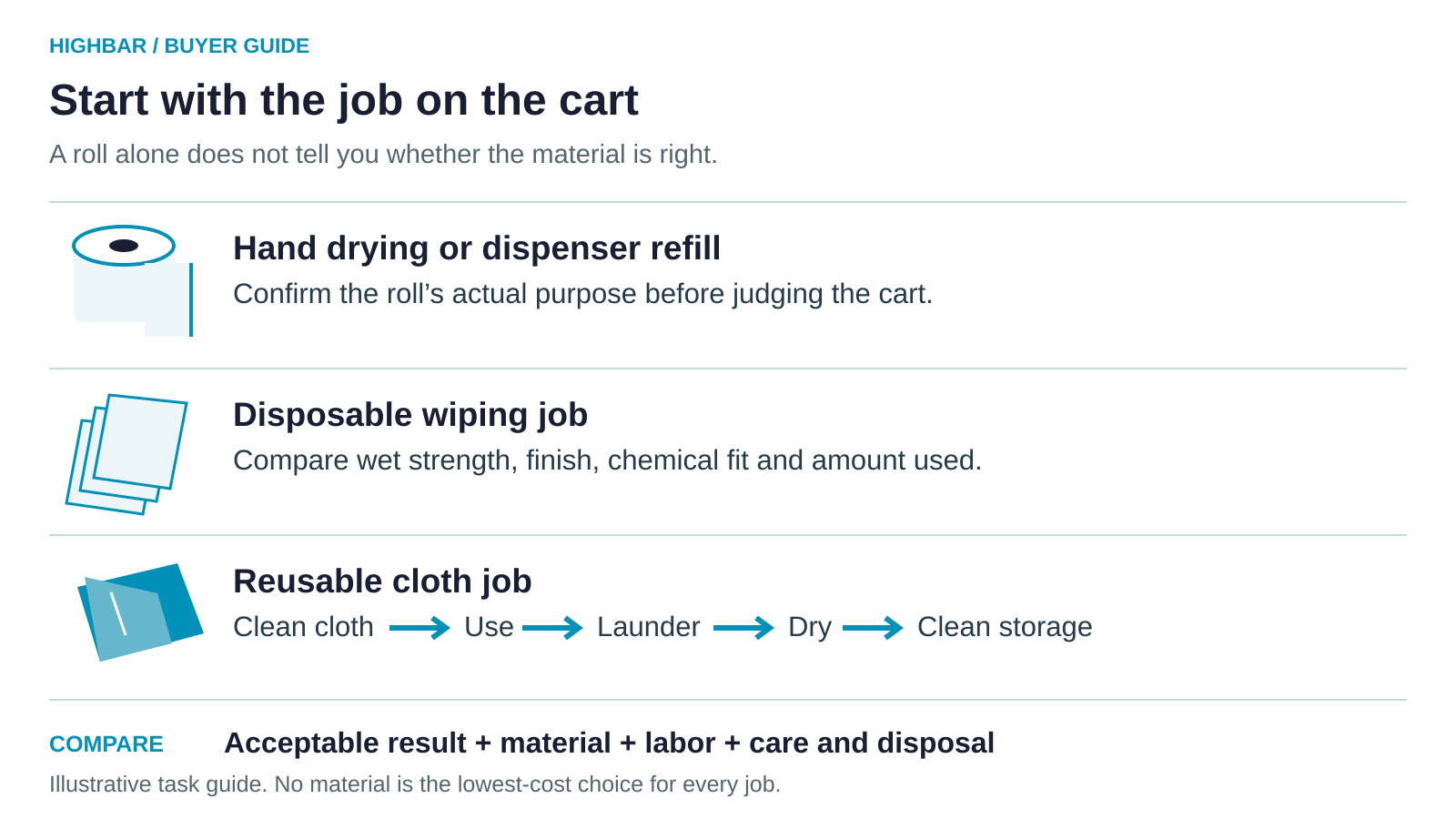
That's the concern at Highbar when we see hand towels doing repeated cleaning work. First, though, find out what's on the cart. A roll may be headed for a restroom dispenser. It may be a cleaning wiper supplied on a roll. Even an ordinary paper towel can be suitable for some cleaning tasks.
Find out why the crew is using it
Ask the person doing the cleaning to show you a routine task. Which product are they using, how much do they take, and why? They may prefer a fresh disposable sheet, lack a workable cloth-laundry arrangement, or simply be using the only material stocked on the cart.
Those answers lead to different fixes. Supplying reusable cloths won't help if nobody is responsible for collecting and laundering them. Changing a wiping product without checking the cleaning chemical can create a compatibility problem. And there's little reason to replace a material that's doing the intended job well at a reasonable total cost.
A university-developed early-care cleaning toolkit hosted by EPA includes paper towels as an option for certain surface-cleaning tasks. That narrow example is a useful reminder: seeing paper on a cart doesn't establish poor practice. The question is whether this product fits this task.
Match the material to the surface and the work
For a spill, assess absorption and the amount needed to pick it up. For repeated wiping, look at whether the material holds together when wet. For glass or a surface that needs a clean finish, inspect the result for lint, streaks and another pass with a fresh sheet.
A disposable cleaning wiper is worth comparing when hand towels tear, leave debris or require repeated handfuls. Check its intended use and chemical compatibility rather than assuming anything labeled “heavy duty” will be better. A reusable cloth is worth considering when the job suits it and the facility can support its care requirements.
If the task includes disinfection, follow the disinfectant label for the surface, application method and required wet contact time. EPA's directions emphasize keeping the surface wet for that time. A cloth or towel that dries the surface too soon cannot be judged solely by how quickly it makes the surface look finished.
CDC's healthcare cleaning guidance also flags material compatibility and proper care of reusable cloths. Those principles matter when comparing options, although the guidance is not a study proving one wiping material saves money in an office.
Compare the cost of completing the job
Case price and sheet price are useful starting points. Neither tells you the full cost when the quantities used or the work required differ.
For disposable materials, record the number of sheets or measured roll length used on the same defined task. Multiply that by the delivered unit cost. Then add the cleaning labor and any material differences in chemical use, disposal or rework.
For reusable cloths, include purchase and replacement cost allocated across actual uses, plus collection, laundering, drying and handling. Avoid counting labor twice if it's already included in a laundry or cleaning service charge. Keep clean cloths separated from used ones and follow the product's care instructions.
A short task comparison can stay simple:
- Use the same type of surface, soil and cleaning product, with the same acceptable finish
- Record material used, time to finish and any tearing, lint or repeat work
- Include the care and disposal work that happens after the surface is clean
- Check that the crew can follow the proposed method during a normal shift
A higher-priced wiper can be the lower-cost choice if less material or work is needed. A reusable cloth can lose its apparent advantage when its care costs are included. Both are possibilities to measure, rather than savings to assume.
Stock the cart around the jobs
Once the comparison is clear, make the chosen materials easy to identify and replenish. Separate hand-drying stock from the products assigned to cleaning. If different cloths are assigned to different areas, make that distinction clear to everyone using the cart.
Highbar's janitorial supplies cover the category. To discuss a wiping-material comparison, contact Highbar with the current product, cleaning chemical and the tasks it's being used for. Start with the actual job, then decide what belongs on the cart.