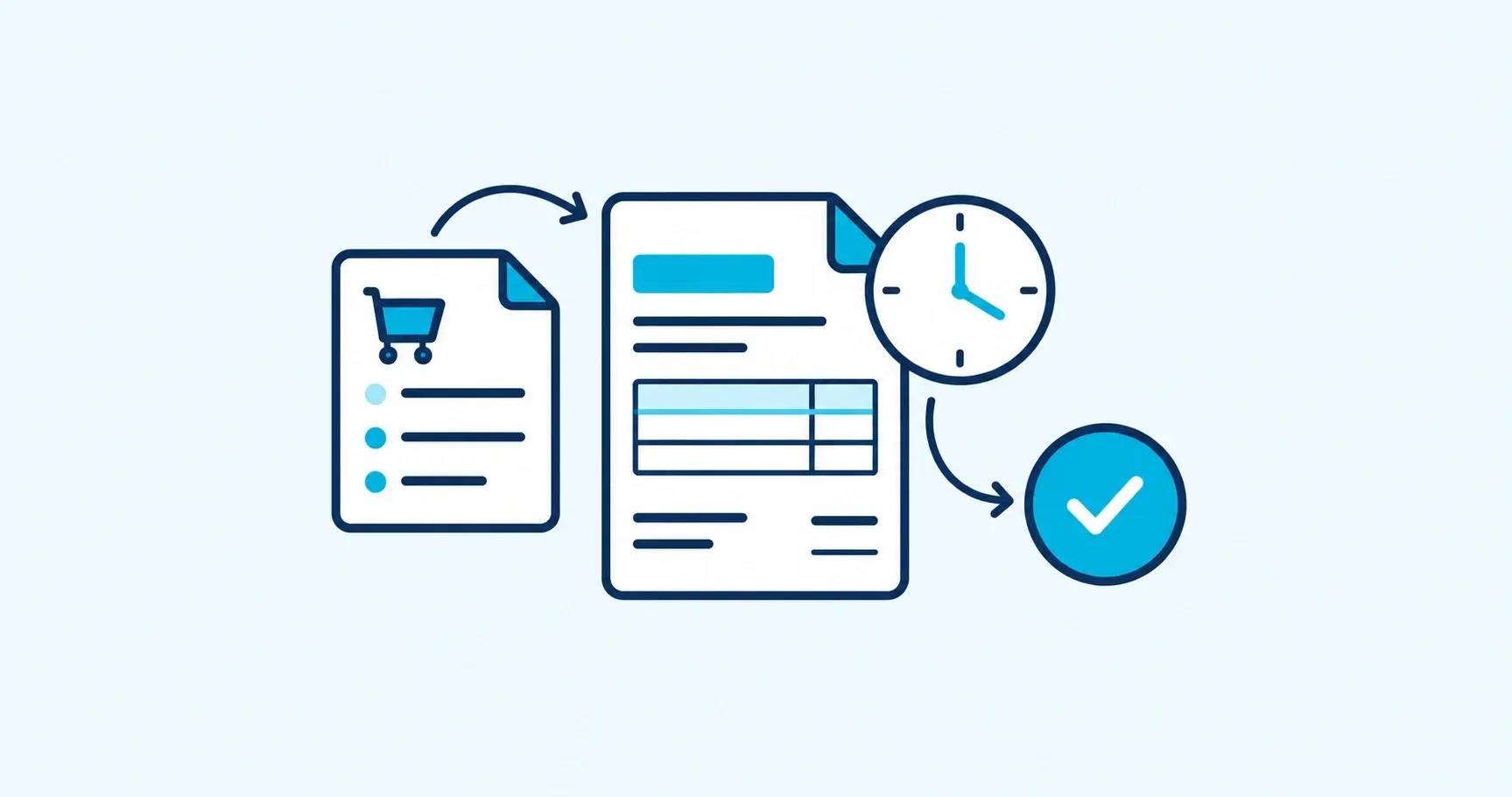
If accounting has to ask which department bought the supplies after the invoice arrives, start by fixing what gets recorded with the order. The delivery address can tell you where the boxes went. It may tell you very little about whose budget should pay for them.
Missing cost ownership is one reason a routine invoice can turn into a string of questions. It is worth separating that problem from a disputed price, a missing delivery or an approval that never happened. Each needs its own answer.
Keep the delivery location and department separate
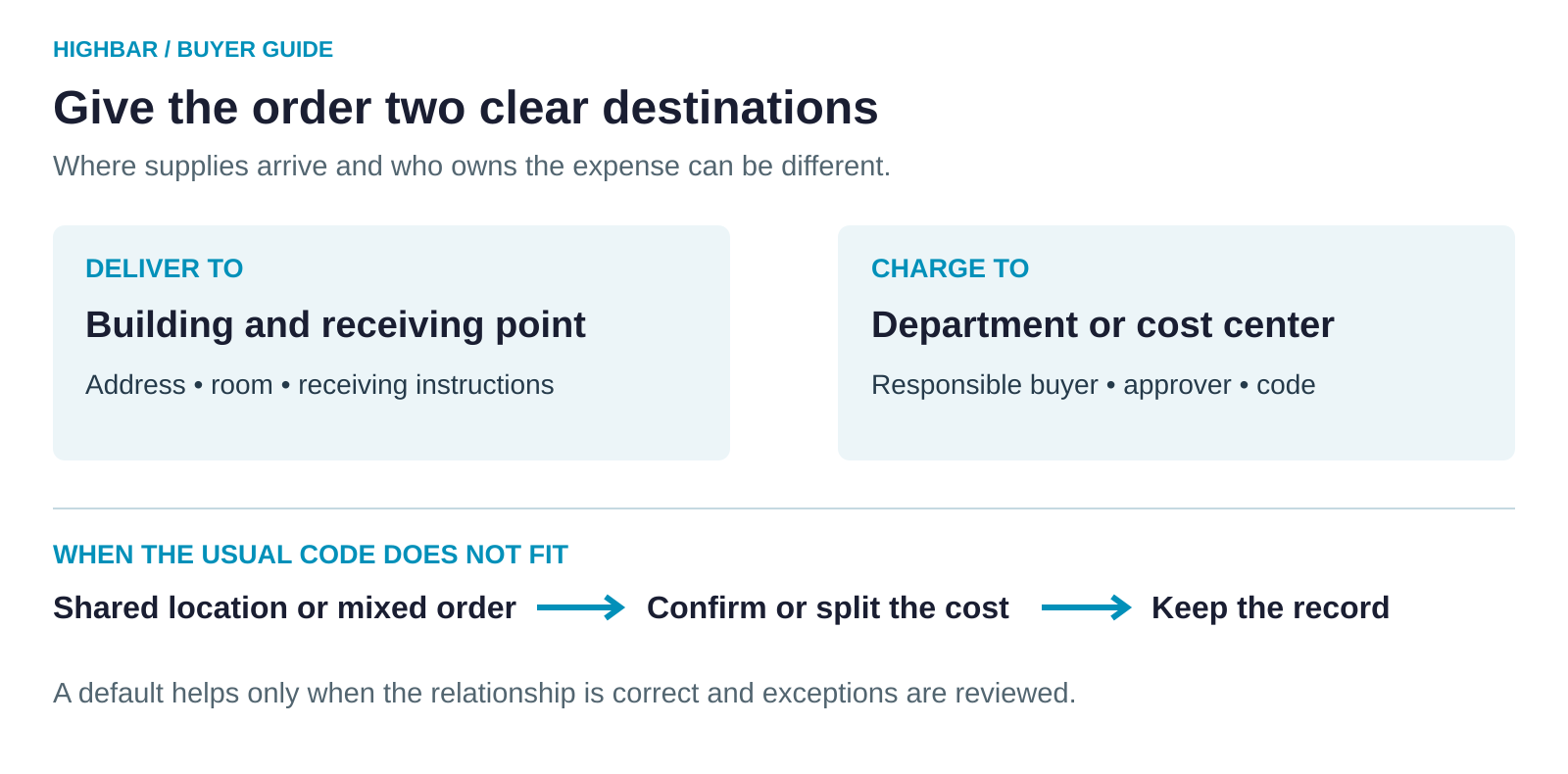
A ship-to identifies the physical destination. A department or cost-center code identifies the internal owner of the expense. Several departments can share one building and one receiving dock. One department can also use supplies at several locations.
Record both pieces of information while the buyer still knows the reason for the order. Include the person who can resolve a question about the charge. The person receiving a carton may be able to confirm that it arrived without knowing how accounting should allocate it.
Department purchasing cards need clear ownership
A purchasing card, or P-card, assigned to a department through designated authorized cardholders can give routine purchases an established payment path. Set the department coding, authorized users, permitted purchases and spending limits according to your organization’s policy and card program.
Keep the supporting records. Someone still needs to confirm what was ordered, what arrived and whether the charge is correct. Transactions need reconciliation and appropriate review. Passing a shared card around without clear responsibility makes that work harder.
The federal purchase-card program is a useful example of the distinction: Treasury guidance includes reconciliation and approving-official review even though the purchase was made with a card. Your organization needs its own suitable controls. A different payment method alone will not settle a missing department, an incorrect charge or a receiving dispute.
Ask for department detail in the billing process
Departmental billing should make it clear which part of the organization owns an expense. Agree with the supplier on the department reference needed at ordering and how that reference will appear in the billing or reporting records your accounting team uses.
This does not have to mean a separate invoice for every department. A consolidated invoice may work if the department detail is clear and usable. Changing internal cost allocation also does not change which legal customer owes the bill.
Before rolling it out, trace an ordinary order through the process. Can the buyer select the right department? Does the reference stay with the transaction? Can accounting find it without contacting the buyer? That small check will tell you more than assuming two systems use the same fields in the same way.
Use ship-to defaults where the relationship holds
A default department tied to a ship-to can be useful when that receiving location reliably belongs to one department. Whether that can be set up, and where, depends on the supplier’s ordering system and your own process.
A shared dock is a different situation. The default may be right for the usual order and wrong for the next one. Give buyers a way to correct it, establish how mixed-department orders are split, and review the mapping when locations or responsibilities change.
Name the person who maintains those defaults. A code that nobody owns can keep sending the same mistake into accounting month after month.
Find the specific question holding up the invoice
Pick a recent delayed invoice and identify what was missing: purchase authorization, proof of receipt, a correct price or a department owner. Then change the part of the process that lost that information.
Highbar’s order approval workflows can support rules for online supply purchases. Those are ordering controls; invoice review and payment remain part of your accounting process. We can discuss the department information and delivery setup you need without assuming every account uses the same arrangement.
Talk through your purchasing setup with Highbar. The goal is to give the buyer, receiver and accounting team enough information to do their part without repeatedly asking the same question.
Sources
U.S. Treasury, Government Purchase Cards, sections 4525 and 4535. Federal-program example of card controls and reconciliation, not a statement of requirements for private companies.