Highbar generally favors gel air fresheners for an ongoing restroom scent program. A passive gel system has a practical attraction: there is no dispenser battery to replace and no spray schedule to manage. If it provides an acceptable fragrance level through the refill cycle, it's a straightforward option.
An automatic spray system can be a better fit when adjustable operating periods or spray intervals matter. The choice comes down to the actual restroom, the equipment and the cost of keeping it working. Here, we're comparing ongoing refill systems, rather than handheld spray cans.
Check the equipment behind the refill
“Gel” describes the fragrance material. It doesn't tell you whether the dispenser is passive or powered.
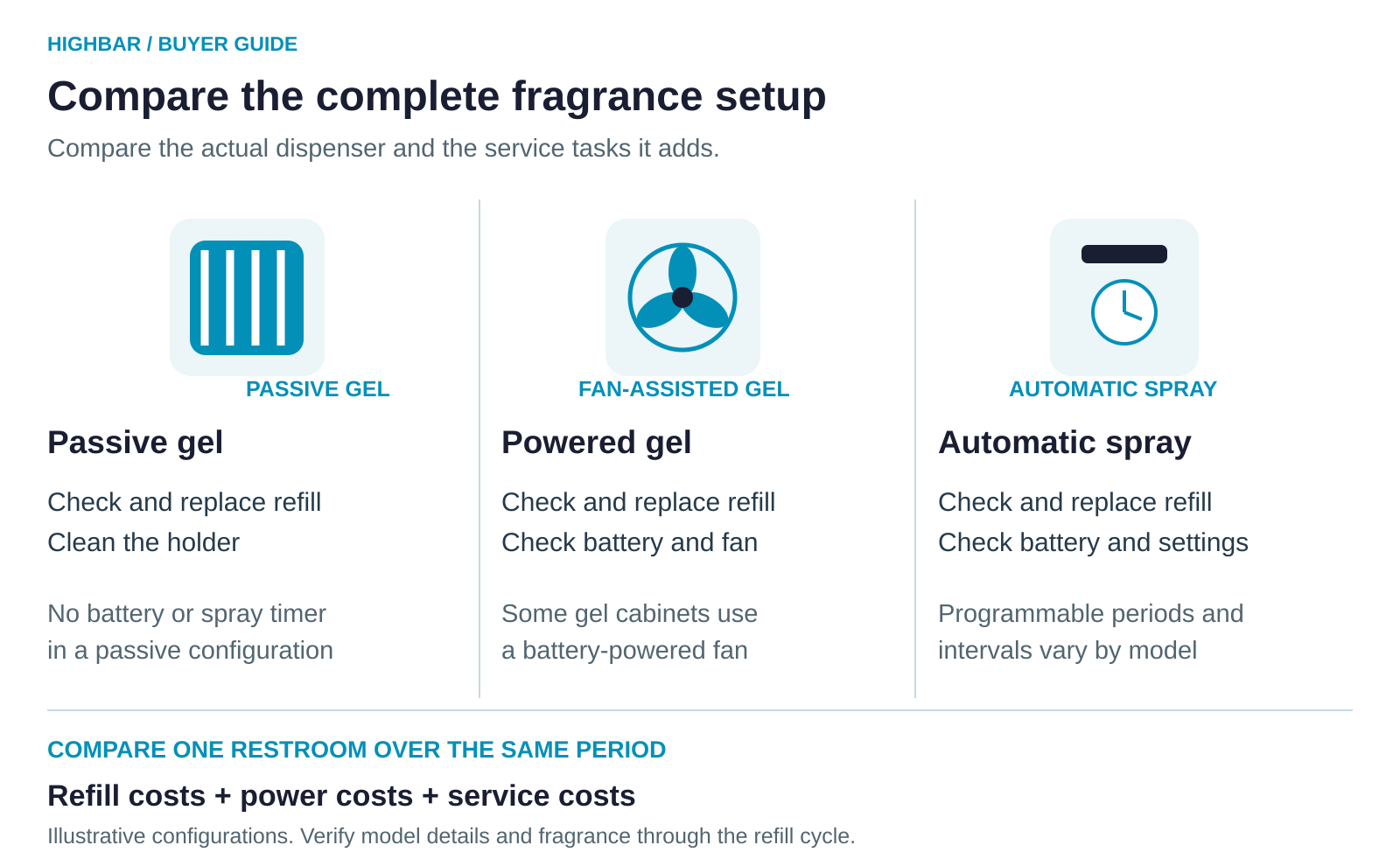
A passive gel releases fragrance without a motor or programmed spray event. Vectair's V-Air Solid, for example, has a gel core and uses natural airflow without batteries. Those are that product's design features, not proof that every gel performs the same way.
Other gel setups use a fan. Hospeco's Impact motorized cabinet accepts gel among its refill options and requires a battery. If that's your equipment, fan and battery checks belong in the service plan.
Automatic spray dispensers release measured bursts from a compatible refill. Controls vary. Vectair's Airoma Family lists adjustable intervals and day/night modes, along with battery power. Check the selected model's instructions before assuming it offers the exact schedule you want.
This distinction is central to our preference. A passive gel can remove battery and programming tasks from the routine. It still needs inspection, cleaning and replacement. Fewer types of tasks don't automatically mean fewer service visits.
Decide whether scheduling is useful
For a restroom that needs fragrance throughout the day, a suitable passive gel may provide all the control you need. It keeps releasing fragrance while exposed, including when the room is unoccupied.
A programmable spray system offers another approach. Where its controls permit, you can align operation with the building's occupied periods and adjust the interval between sprays. That can be useful when a restroom's operating hours are limited or the required output needs adjustment.
Check how those settings affect the actual refill. Shortening operating hours doesn't necessarily reduce refill purchases in the same proportion. Use the manufacturer's programming instructions and your replacement records rather than assuming an automatic saving.
Judge the whole refill cycle
Neither format earns a universal win for coverage or fragrance consistency. A continuous release doesn't establish identical scent strength from the first day to the last. Timed bursts don't establish that users will notice unpleasant peaks or gaps, either.
Before standardizing, try the proposed setup in a representative restroom through the intended service interval. Note the room layout, exhaust operation, placement, occupied hours and number of units. Check the result at normal occupied times, including early and late in the refill's life.
Agree what “acceptable” means. A strong scent next to the dispenser on installation day isn't enough to judge the room. Record whether the fragrance is acceptable where people actually use the space and whether complaints or early replacements occur. Respect the building's fragrance policy throughout the comparison.
Manufacturer coverage and refill-life claims are useful starting points for selecting a trial. They aren't a substitute for checking the proposed setup in your building. Adding more units or replacing them earlier also changes the cost comparison.
Compare the recurring cost per restroom
Compare both options over the same period and against the same acceptable service level. Count every installed unit required in that restroom.
Recurring cost = refill costs + battery or power costs + attributable service labor costs + applicable service or disposal charges.
Use delivered refill costs and actual replacement dates. Include time for inspection, changing refills, cleaning the dispenser and checking batteries or settings. If a service fee already includes that work, don't add the same labor again. Show hardware purchase, installation and switching costs separately when comparing the first year.
A cheaper can or gel refill can cost more over time if the room needs more units or more frequent replacement. A passive gel's simpler equipment can be attractive, but it still has to deliver an acceptable result at the full operating cost. No reliable category-wide cost winner follows from refill price alone.
Address persistent odor before increasing fragrance
Check cleaning, waste removal and working exhaust when an odor keeps returning. EPA's indoor-air guidance emphasizes addressing pollutant sources and ventilation. Fragrance does not demonstrate that an underlying odor problem has been corrected, and this comparison establishes no health advantage for either format.
For a practical review of your restroom and janitorial supplies, bring the current dispenser and refill details, replacement history and room requirements. Contact Highbar to discuss the options. We'll start with the gel approach we generally favor, while keeping the actual room and operating requirements in view.