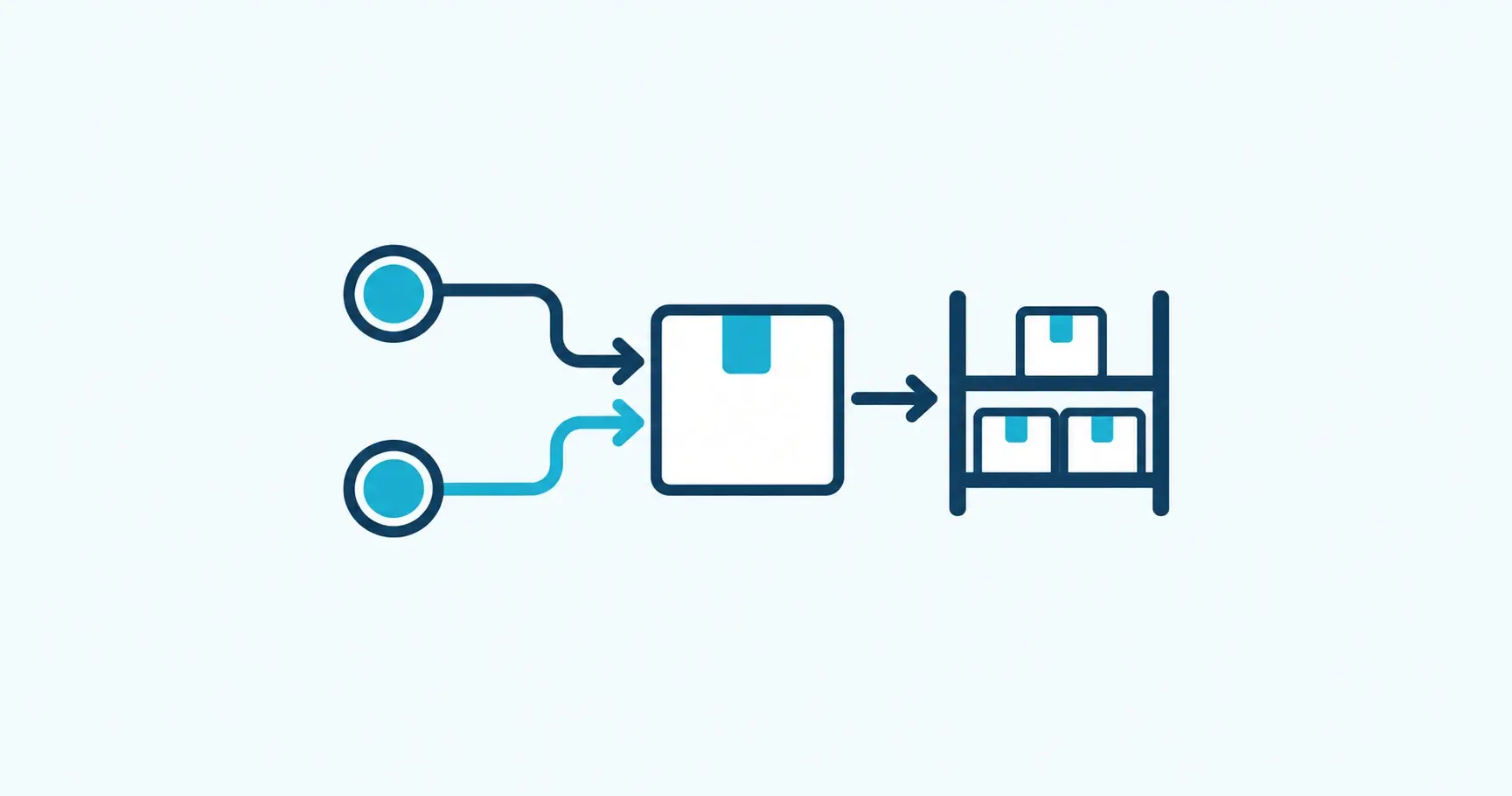
Essendant's announced plans to close its business are a reason to look closely at where office supplies come from. Highbar is buying more directly and stocking more inventory in our warehouse to improve fill rates and reduce backorders. We want more of the products our customers use regularly available to fill their orders.
The issue reaches beyond the supplier name on an invoice. A business can have several purchasing accounts and still depend on the same upstream source for an important item. Understanding that dependence is part of building a better supply plan.
Why Essendant's closure announcement matters
Essendant was a multibillion-dollar wholesaler while it was publicly traded. Its historical scale makes the current development worth buyers' attention: a large source of supply can become unavailable, even after years of being part of the purchasing routine.
The Daily Herald reported on September 18, 2026, that Essendant had told state officials it expected to cease operations and close its business, including its Lincolnshire headquarters. Headquarters employee terminations were planned for October 3 or within the following 14 days. The company had also explored asset sales and additional capital to avoid liquidation, with the outcome of those efforts uncertain.
For buyers reviewing supply on October 3, the announced closure is enough reason to act. Find out which recurring items are stocked, which depend on an upstream order and what would happen if that replenishment route stopped working.
Look beyond the number of supplier accounts
Consider two dealers that source a particular item from the same wholesaler. Moving an order from one dealer to the other may leave the buyer waiting on the same warehouse. A second account provides more useful backup when its stock or sourcing route is genuinely available independently.
Ask about the products that would interrupt work if they ran out. Does the supplier hold them? Is the quoted availability based on its own inventory or someone else's? Would the proposed backup use the same upstream source?
Those questions make a backup plan more useful than a list of company names. They also help distinguish a broad online catalog from the quantities actually ready to fill an order.
Why Highbar is buying more directly
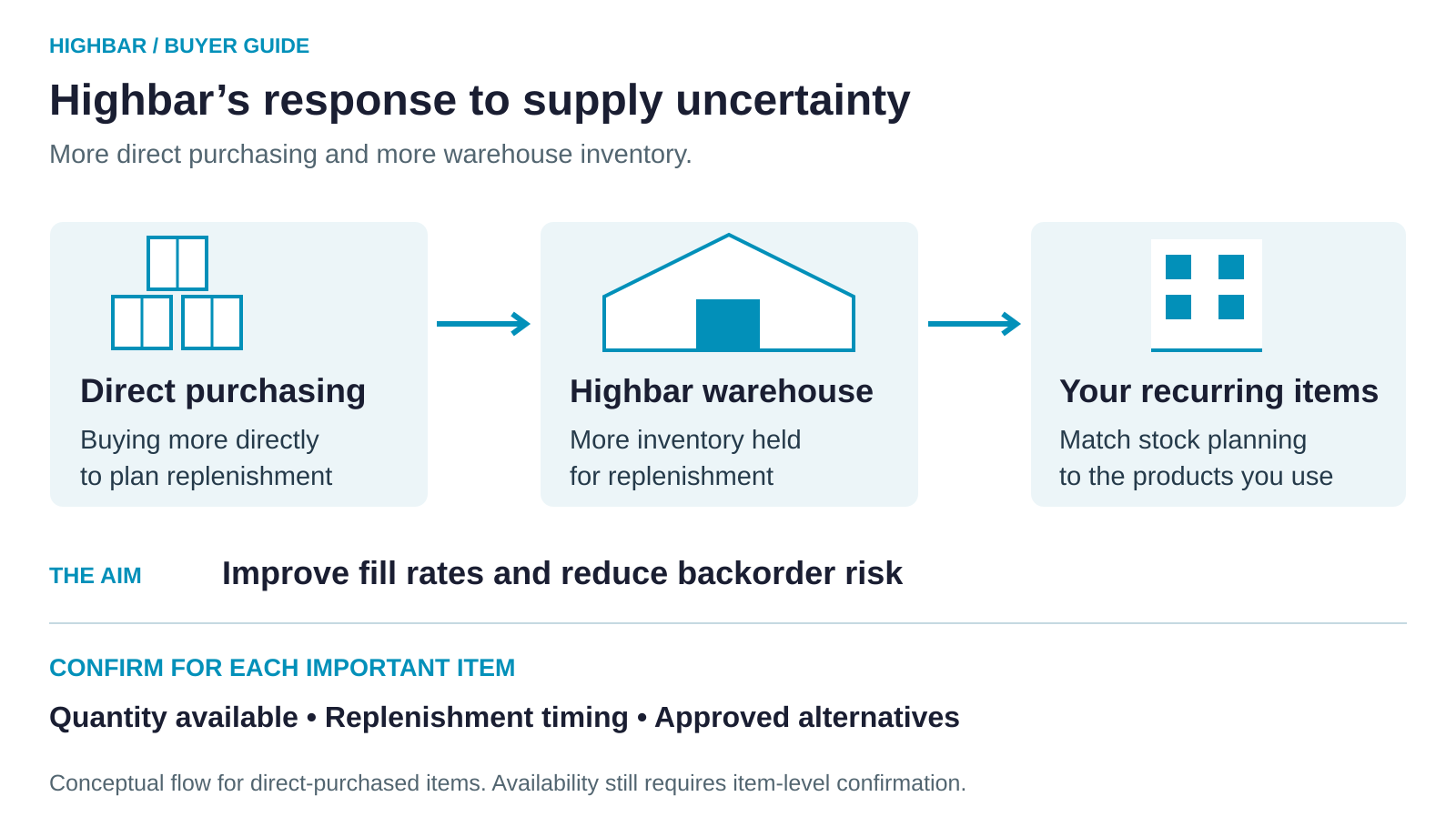
We're increasing direct purchasing so that more of our replenishment can move through that sourcing route. For products bought this way, it reduces our dependence on an additional wholesale step and puts more of the planning responsibility with us.
That responsibility includes order quantities, lead times, shipment timing and the inventory needed between deliveries. Direct buying still depends on production and transportation. We have to plan around those requirements, rather than assume a direct order will always arrive faster.
The purpose is practical: strengthen the supply arrangements behind the products our customers repeatedly need. We are pairing that purchasing change with more stock in our own warehouse.
Put inventory behind recurring demand
Stock on hand gives us a buffer while the next shipment is on its way. That is why we're increasing warehouse inventory with the aim of filling more orders and reducing backorders.
The right items matter as much as the overall amount. Extra inventory of a slow-moving product won't cover demand for your everyday paper, toner or restroom refill. Inventory also uses money and space, so the stocking plan needs to reflect repeat demand and replenishment lead times.
Let your supplier know about a new location, a seasonal increase or a change in staffing before the usual order quantity stops being enough. Better demand information helps make stocking decisions specific. Confirm the actual item and quantity available when placing an order.
Build the plan around the products you use
Review four things for each essential recurring item:
- The exact product, pack size and normal order quantity
- Stock available now and the source of the next replenishment
- The expected lead time and an independently available backup
- An acceptable substitute agreed before an urgent shortage
Substitutions need to work in practice. A toner cartridge must suit the printer. A restroom refill must fit the dispenser. A different case quantity can change the price comparison. Set those requirements before an urgent replacement is needed.
A recurring-item list also makes it easier to standardize purchases where it makes sense. Keep necessary exceptions, and focus inventory on what the business actually uses.
Highbar is taking action through more direct buying and more warehouse stock. To review your own supply needs, contact Highbar with your regular items and quantities. Start with what needs to be available, then build the purchasing and backup plan around it.
Sources
- Daily Herald, September 18, 2026: Essendant's announced business closure and timing
- U.S. Securities and Exchange Commission: Essendant 2017 Form 10-K with historical consolidated net sales