
One of the most common mistakes I see is a buyer asking a supplier to send over a list of supplies and prices before looking at the products and quantities the business actually uses. In my experience at Highbar, those requests usually go nowhere. There is no clear basis for deciding what to do next.
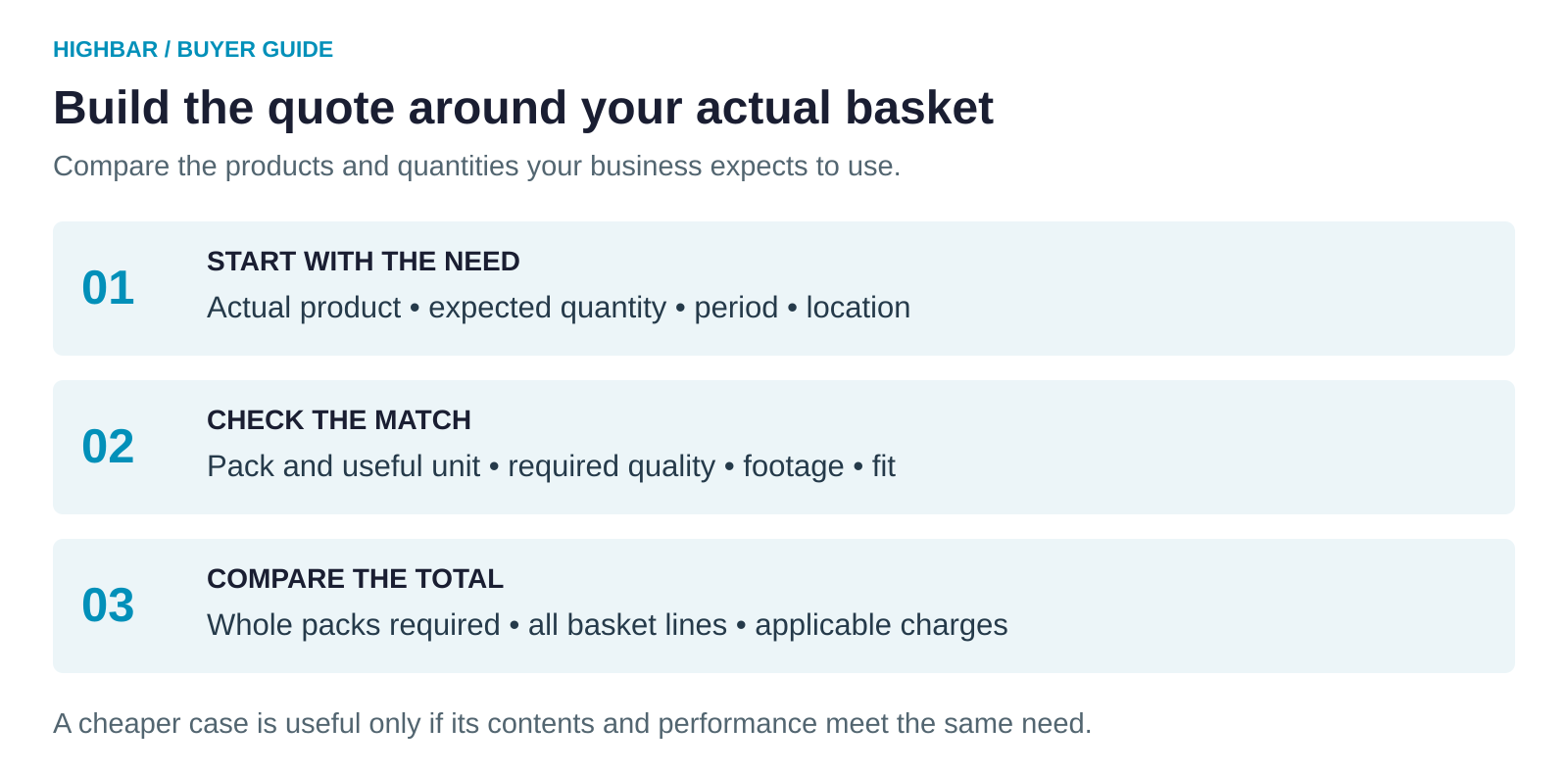
If you want a useful quote, start with your actual supply needs. Give each supplier the same products or requirements, realistic quantities and the same period to price. Then check the units, quality and fit before comparing the total.
Build the list from your own purchases
Your invoice history or purchasing report is a practical place to begin. List the items you buy, the pack size and the quantity. Include the supplies bought outside the usual account, too, or the quote will cover only part of your spending.
Choose a period that represents normal use. Adjust for a one-time project, a large stock-up order or a change in staffing. Check what is still on the shelf. Products purchased during a period are not necessarily products used during that same period.
Start with the recurring items that account for meaningful spend or cause problems when they run out. Copy paper, restroom tissue, roll towels, liners and hand soap are more useful starting points than a random page from a catalog.
For each item, provide enough detail to identify what you need. An item number helps, but so do the required size, material, application and equipment it must work with. Identify which specifications are firm and where you are open to another product.
Make the quantity comparison fair
A lower case price can hide a smaller case. Check the number of rolls, sheets, bottles or individual items in each quoted pack. Express the comparison in the same useful unit so the quantity difference is visible.
For roll towels, that includes the footage and width. Two cases with the same number of rolls can contain different amounts of paper. Comparing price per foot can clarify that difference, but it does not settle absorbency, dispensing performance or the amount people will use.
Dispenser fit deserves its own check. Ask for the actual refill and dispenser relationship, rather than assuming a roll fits because the dimensions look close. If a proposed change requires new equipment, include that change in the decision before calling the quote lower.
Decide what counts as an acceptable replacement
“Comparable” needs to mean something specific. State the quality and performance required for the job. Ask the supplier to identify substitutions and explain the relevant differences instead of letting a lower-priced alternative disappear into the quote.
The same idea appears in federal brand-name-or-equal purchasing: an equivalent offer is evaluated against stated physical, functional or performance characteristics. You can use that basic discipline without turning a routine supply review into a government bid process.
Where the difference matters, check the proposed item in the actual application before making it standard. A specification sheet can help establish dimensions and compatibility. It does not tell you everything about how your staff will use the product.
Compare the complete expected spend
Apply each offer’s prices to the same expected quantities, using matching units. If the supplier sells only whole cases, account for the cases you will actually need to buy and any extra stock left over. Add applicable delivery charges or other required costs.
Check every line. A cheap price on an occasional purchase can attract attention while a routinely used item is more expensive. A basket total is incomplete if important products were omitted, replaced without explanation or quoted in a different pack size.
Also ask how long the pricing is valid and whether any conditions or commitments apply. Separate those terms from the product-price comparison so a low starting price does not conceal a different purchasing arrangement.
A generic price list can help you explore a supplier’s range. Your own basket is what makes the conversation useful for your business. Highbar’s standardized procurement approach includes agreed products and an approved-item catalog. Start by showing us what you order today, and we can talk through the products, quantities and fit.
Sources
NIST, Unit Pricing Guide, 2025. Consistent units for price comparisons.
Federal Acquisition Regulation, Brand Name or Equal. Federal example of specifying equivalent physical, functional and performance characteristics.