
Choose cleaning gloves by matching the exact glove model to the product and the work. A material name such as nitrile, a familiar color or a “chemical resistant” label leaves important questions unanswered. The buyer needs to know what the glove was evaluated against and whether that evidence fits the task.
Start with the work being done
A person dispensing concentrated cleaner may face different exposure from someone wiping a surface with a diluted solution. Handling a saturated cloth or tool also differs from brief, occasional contact. Those distinctions belong in the purchasing decision.
OSHA’s hand-protection standard requires selection based on the protection’s performance relative to the task, conditions, duration and hazards. A useful place to start is a short list of cleaning jobs and products used at your facility. Keep the concentrate and working dilution separate where both are handled.
For each job, record the product name, intended dilution, how hands could contact it and whether contact is intermittent or prolonged. Add the temperature, physical demands and coverage needed. These details give the safety lead and manufacturer a meaningful question to answer.
Understand what chemical resistance means
Gloves can fail in different ways. Penetration involves a chemical getting through a defect or opening. Degradation is a physical change to the material. Permeation is movement through the material itself. A glove can therefore need replacement before a worker sees an obvious tear.
Laboratory breakthrough information helps assess chemical compatibility, but it should not become a guaranteed shift-length wear time. Test conditions and actual use may differ. Temperature, concentration and the glove’s construction matter, and performance should not be transferred automatically between models made from the same material.
When a chart looks reassuring, check what it actually tested. A result for a named chemical does not necessarily settle the question for a formulated cleaning product containing several ingredients. Ask for clarification rather than filling the gap with a general material chart.
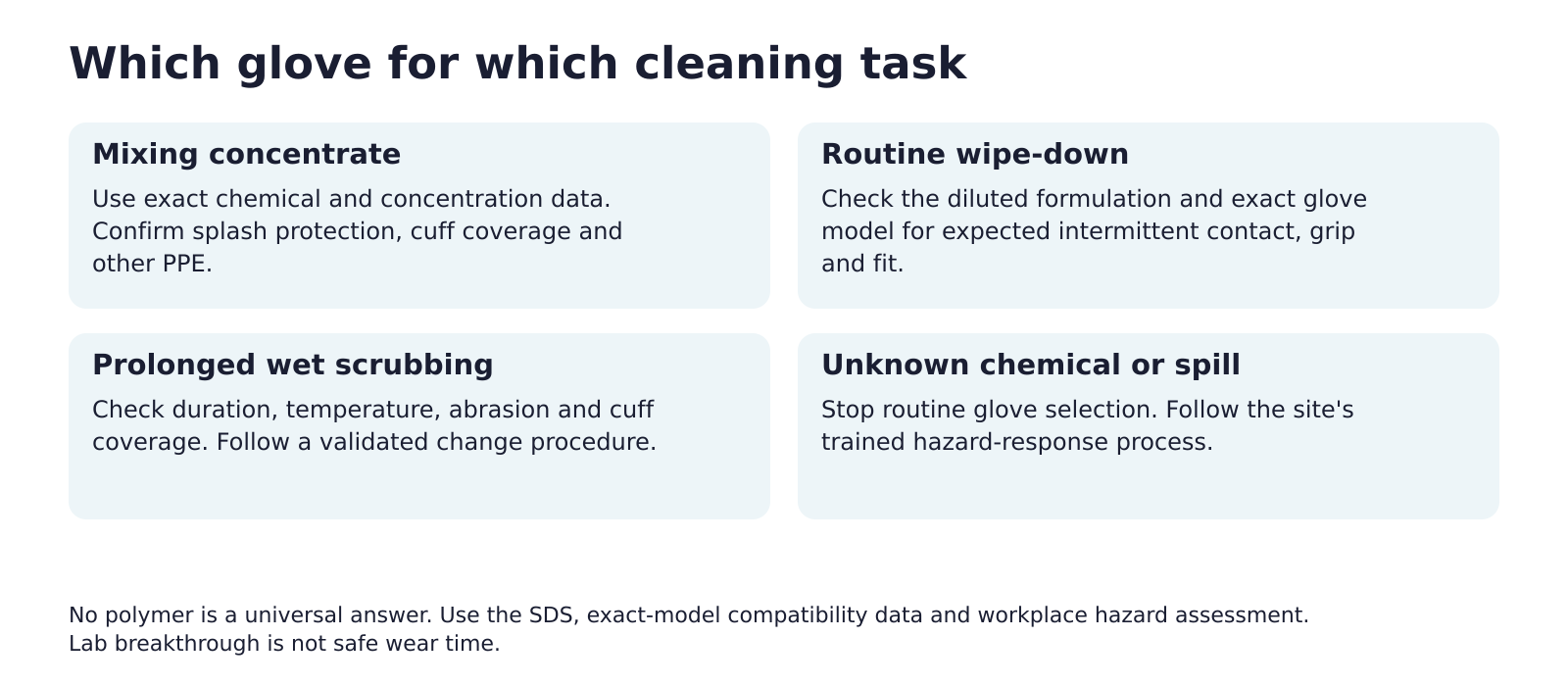
Select the infographic to open it at full size. The article also explains the comparison in text.
Use the SDS, then close the information gaps
The safety data sheet is an essential starting point. Section 8 covers exposure controls and personal protection. Read it alongside the product label and your workplace assessment. If it only calls for protective gloves, the purchasing specification still needs more detail.
Ask the chemical and glove manufacturers for compatibility information relevant to the actual formulation, concentration and intended use. Request the exact model and available test conditions. If the necessary evidence is missing, have the facility’s safety lead resolve the selection before that glove is approved for the job.
Gloves are also one part of exposure control. A dispensing arrangement or work method that reduces hand contact can change the exposure being assessed. Review that arrangement rather than assuming the answer is always a heavier glove.
Turn the decision into a usable reorder record
Once a combination has been approved, save enough information that purchasing can repeat it accurately. The record should be short enough to use at the shelf or ordering screen, with the supporting documents available when needed.
- Cleaning task and exact product, including the approved dilution
- Glove manufacturer and model, required sizes, cuff coverage and other specified features
- Compatibility evidence, its date and the conditions or limitations attached to it
- Approved use, inspection, removal and replacement instructions
- Person responsible for reviewing changes or proposed substitutions
Check fit and the work around the chemical
Chemical resistance does not answer every practical question. Workers may need wet grip, dexterity or protection from abrasion as well. Poor fit or inadequate coverage can undermine an otherwise sensible selection. Include these requirements when discussing the task with the safety lead.
Keep instructions accessible where gloves are issued. A substitute that looks similar should go back through the approval process when its construction or performance evidence differs. The same applies when the cleaning product, dilution or work method changes.
Avoid an informal system in which the most experienced employee is the only person who knows which box goes with which task. A documented combination makes that knowledge available across shifts and locations.
Buy against the approved specification
A useful glove order names the approved model and task requirements clearly. That gives your janitorial supplies conversation a concrete starting point and makes proposed alternatives easier to evaluate.
For facilities with repeated orders, standardized procurement can help keep approved purchasing details together. Review the protection decision with the people responsible for workplace safety, then make the correct reorder straightforward for everyone else.