Repair a commercial vacuum when it can safely return to the required cleaning job at a better forward-looking cost than replacement. Replace it when the repair, likely repeat problems and disruption make the alternative more economical. The useful comparison is bigger than a repair bill beside a new machine’s sticker price.
A vacuum that stops picking up properly does not automatically need a motor or a replacement. Ask for a diagnosis that separates routine maintenance, worn components and more serious damage. Have the technician identify what the quoted work fixes, what remains worn and whether parts are available. A quote without that explanation leaves the most important question unanswered: what service are you buying back?
Safety comes first. OSHA requires portable cord-connected equipment to be inspected before use on a shift and removed from service when damage could expose an employee to injury, until the necessary repairs and tests make it safe. Do not keep a damaged unit working while someone debates the budget. Electrical testing belongs with qualified personnel.
There is no defensible national B2B replacement-cost average in the independent evidence reviewed for this article. Machine type, site demands, freight and purchasing arrangements vary. Rather than turn a handful of selling prices into an “average,” use a complete quote and a consistent worksheet.
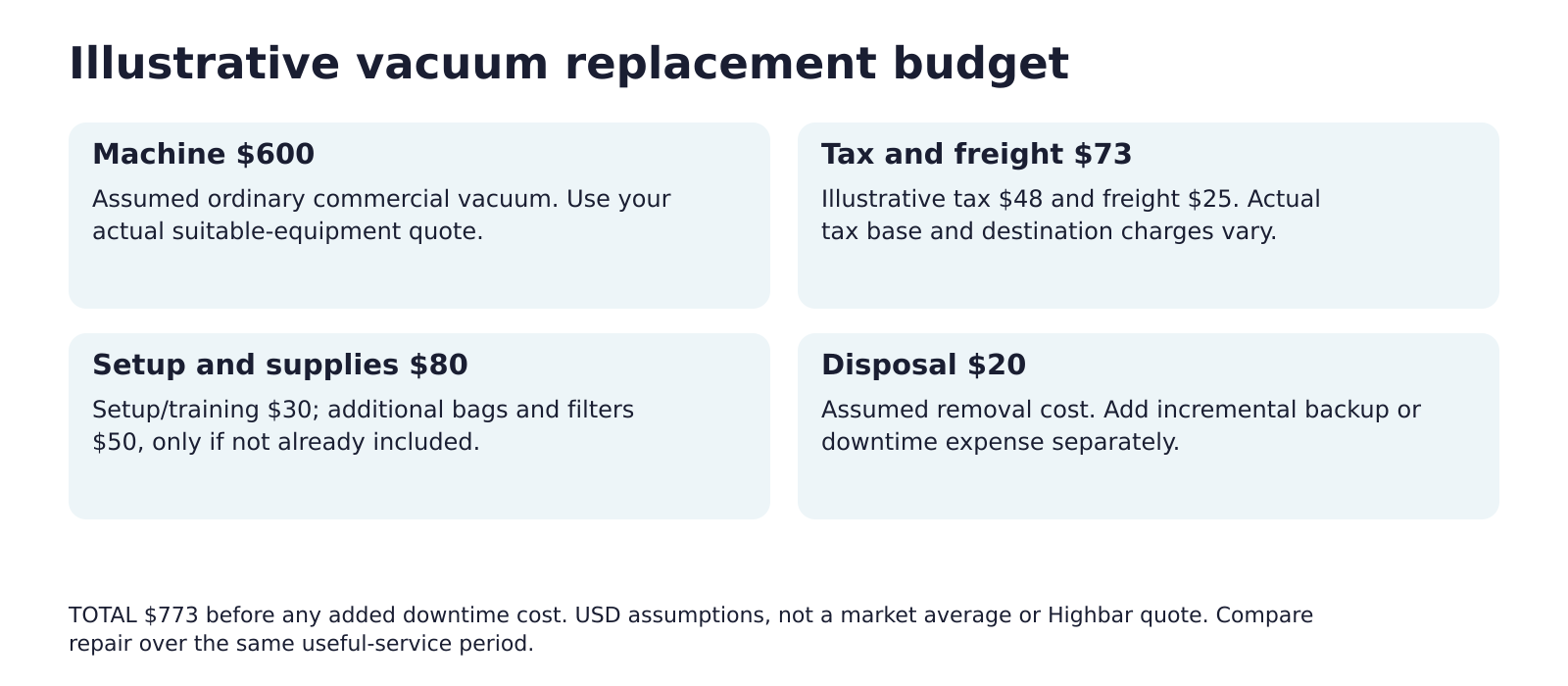
This example shows how to build that worksheet. Every amount is an illustrative assumption in U.S. dollars, not a market average or supplier quote.
| Replacement input | Assumed cost |
|---|---|
| Machine | $600 |
| Sales tax: assumed 8% on machine only | $48 |
| Freight | $25 |
| Setup and operator training | $30 |
| Incremental starter bags and filters | $50 |
| Old-machine disposal | $20 |
| Initial replacement outlay | $773 |
Select the infographic to open it at full size. The article also explains the comparison in text.
The $773 example is an initial outlay, not a complete ownership cost. Add any extra cleaning labor or temporary equipment needed while the replacement arrives. Remove supplies already included in the machine price, and substitute the actual tax treatment. Do not charge the budget twice for the same item.
For the repair option, collect the diagnosis fee, parts and labor, shipping or service travel, turnaround time and any backup cost. Then compare both choices over the same period at the same required cleaning quality. Include likely maintenance, operating differences, another replacement if needed during that period and remaining equipment value at the end.
This follows the logic of life-cycle costing: consider the relevant future costs and value of each alternative. Money already spent buying or repairing the old vacuum should not be charged again. Its repair history still matters because it helps you judge reliability. A recently replaced component and a series of unresolved failures tell different stories.
A slower cleaning route or repeated interruption can matter more than a small purchase-price difference. But measure it. If either choice needs an additional 10 minutes per cleaning day over 250 days, that is about 41.7 hours a year. At an assumed loaded labor cost of $25 an hour, the difference is approximately $1,042. Those are example inputs, not a claim that a new vacuum will save that time.
Include wages and the applicable employment burden, or the actual contracted rate. Ordinary cleaning labor cancels out of the comparison only when it is genuinely equal. If a contractor supplies the equipment, first check who bears the replacement and downtime costs under your agreement. Our guide to buying cleaning supplies or using a cleaning company explores that responsibility question.
A sensible approval note can be short: the diagnosed fault, repair cost and turnaround, complete replacement outlay, expected service under each option and the operational reason for the choice. Record the assumptions that could change the answer, especially parts availability and repeat downtime.
There is no universal replacement birthday or repair-price percentage that settles every case. Keep compatible bags, filters and routine wear items in the janitorial supply plan, and use standardized procurement to make repeat buying consistent with the equipment you actually operate. The goal is dependable cleaning at a defensible cost, whether that means keeping the current vacuum or replacing it.